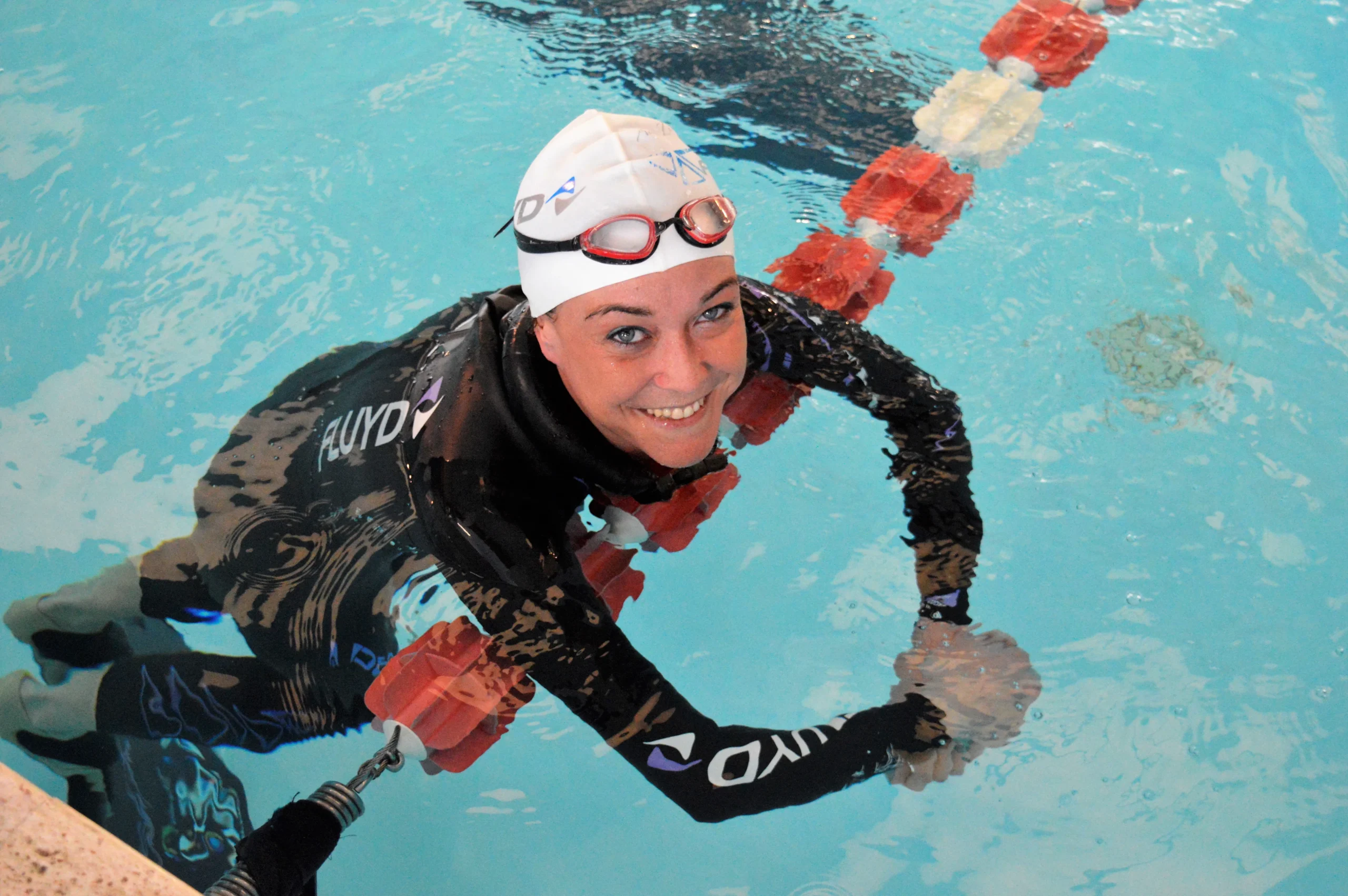
What would you do if your dream required you to dive hundreds of feet into the ocean with only one breath?
There would be no oxygen tank. No quick way to stop and breathe. As the sunlight disappeared above, the water would become darker, the pressure would increase, and every movement would matter. For most people, the idea alone sounds frightening. For Alessia Zecchini, it became the pursuit that would shape her life.
But her story isn’t simply about how deep she could dive. Behind the world records are years of training, failures, patience, love, heartbreak, and one tragic day that changed everything.
The Dream Started When She Was Only 13
Alessia Zecchini was born in Rome, Italy, in 1992. At just 13, she discovered freediving and quickly became fascinated by the underwater world. She was especially inspired by Russian freediving champion Natalia Molchanova, whose achievements showed her what years of discipline and mental control could make possible.
There was one problem: Alessia couldn’t immediately compete at the senior level. She had to wait until she was 18.
For a teenager eager to prove herself, those years could have felt like an obstacle. Instead, they became preparation. She kept training, developing her technique and learning how her body responded underwater. Long before the world knew her name, she was already building the foundation for the career she wanted.
What Happens Before a Record?
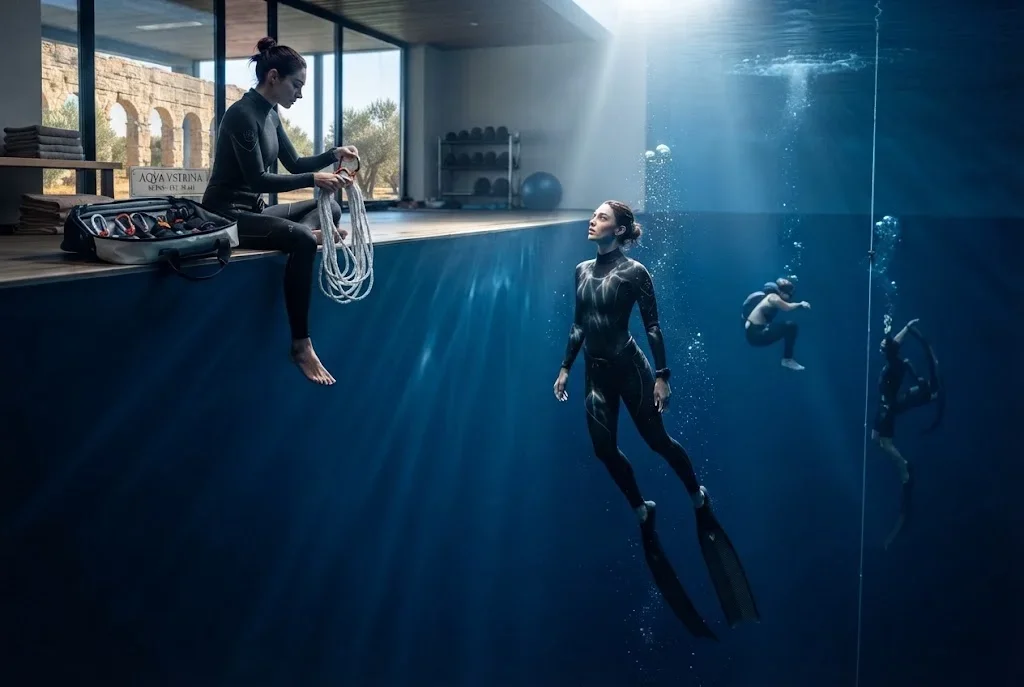
From the outside, freediving can look almost effortless. A diver disappears beneath the surface, reaches an extraordinary depth, and eventually returns. What the audience doesn’t see is everything that happens before that moment.
Alessia’s training involved pool sessions, gym work, flexibility exercises and the mental preparation needed to remain calm underwater. Freediving isn’t simply about holding your breath for a long time. The deeper a person goes, the more pressure the body faces and the more important controlled movement and oxygen management become.
There is also the mental battle. Fear, excitement or unnecessary movement can make a difficult dive even harder. Alessia had to learn to stay focused while her body was telling her it needed air.
And not every attempt worked.
Failure became part of the process. Instead of treating unsuccessful dives as the end of the road, she learned to look at what went wrong and use it to prepare for the next attempt. Years of small improvements eventually began turning into major achievements.
Then the Numbers Started Getting Bigger
Alessia gradually established herself among the world’s leading freedivers. She competed in different disciplines, including pool events and deep open-water dives, each requiring its own combination of technique and physical control.
In 2017, she reached 104 metres—about 341 feet—in the constant-weight monofin discipline at Vertical Blue in the Bahamas. It was a major achievement and placed her firmly among the sport’s leading athletes.
But the number itself doesn’t tell the whole story.
A dive may last only a few minutes, yet the preparation behind it can represent years of work. Every metre reached is built on training sessions that spectators never see, mistakes that had to be understood and the discipline to return to the water again and again.
Then, in the same year, Alessia’s life took a completely different turn.
She Met Someone Who Understood Her World
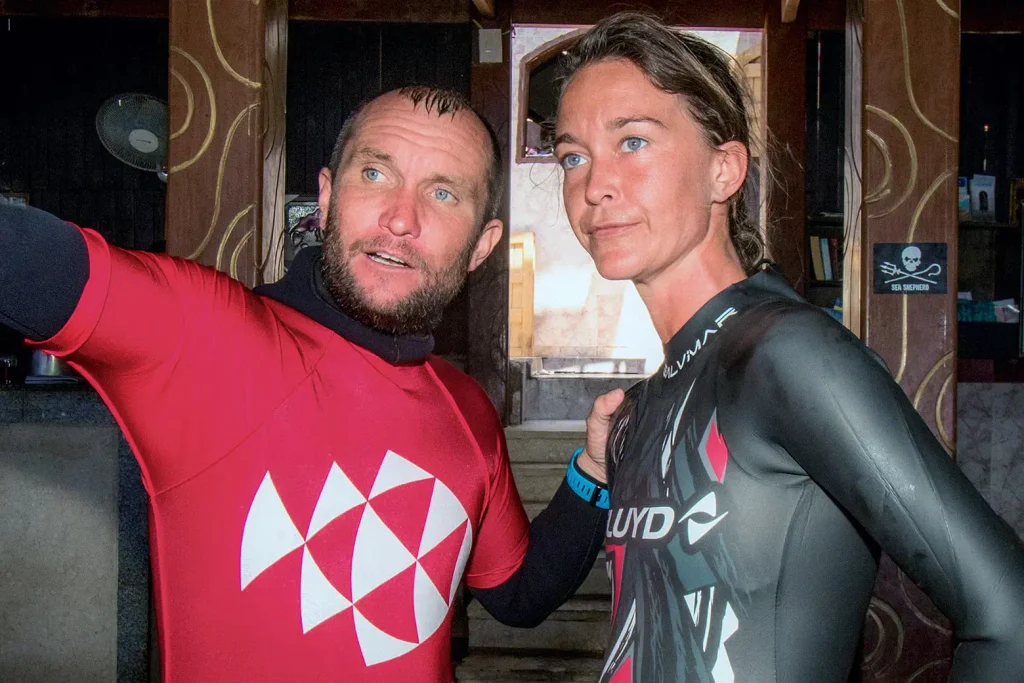
In 2017, Alessia met Stephen Keenan, an Irish freediver and experienced safety diver working in Dahab, Egypt.
Stephen understood the world Alessia had chosen. He knew the risks of deep diving, the importance of preparation and the trust required between a diver and the people responsible for keeping that diver safe.
Their shared connection to the ocean brought them closer, and their relationship grew beyond their work in the water. For Alessia, Stephen was someone who could understand the unusual demands of the life she had chosen—the training, the pressure of competition and the risks that came with chasing greater depths.
But the ocean that had brought them together would soon become the setting for a tragedy neither of them could have expected.
The Dive That Changed Everything
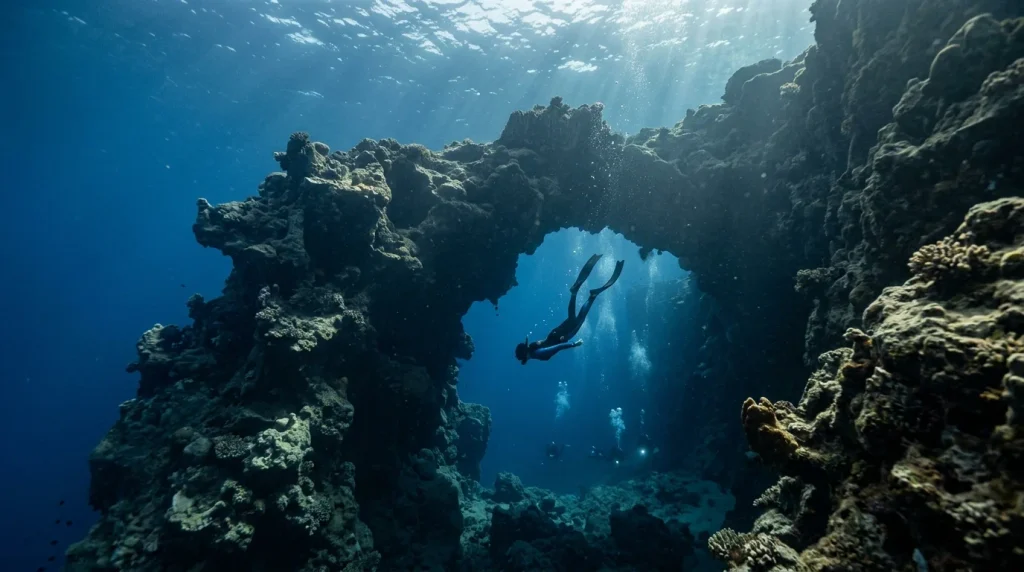
On July 22, 2017, Alessia attempted a challenging dive at the Blue Hole near Dahab, Egypt. The route involved passing through an underwater arch, making careful navigation and coordination with the safety team especially important.
During the dive, Alessia became disoriented after passing through the arch and couldn’t find the expected route. Stephen went down to help her and guide her back toward the surface.
Then something went terribly wrong.
During the rescue, Stephen suffered a fatal underwater blackout. Attempts were made to revive him, but he died. He was 39 years old.
Alessia survived, but the dive left her with a loss that no medal or record could erase. The person who had shared her passion for the ocean was suddenly gone.
It is easy to look at a tragedy like this and search for one simple explanation. But the circumstances were far more complicated. Freediving at significant depths is an exceptionally dangerous activity, and even experienced divers and safety teams can face situations that leave very little room for error.
For Alessia, however, the biggest consequence wasn’t a lesson about statistics or technique. It was personal.
She had lost someone she loved.
How Do You Return to Something That Reminds You of Loss?
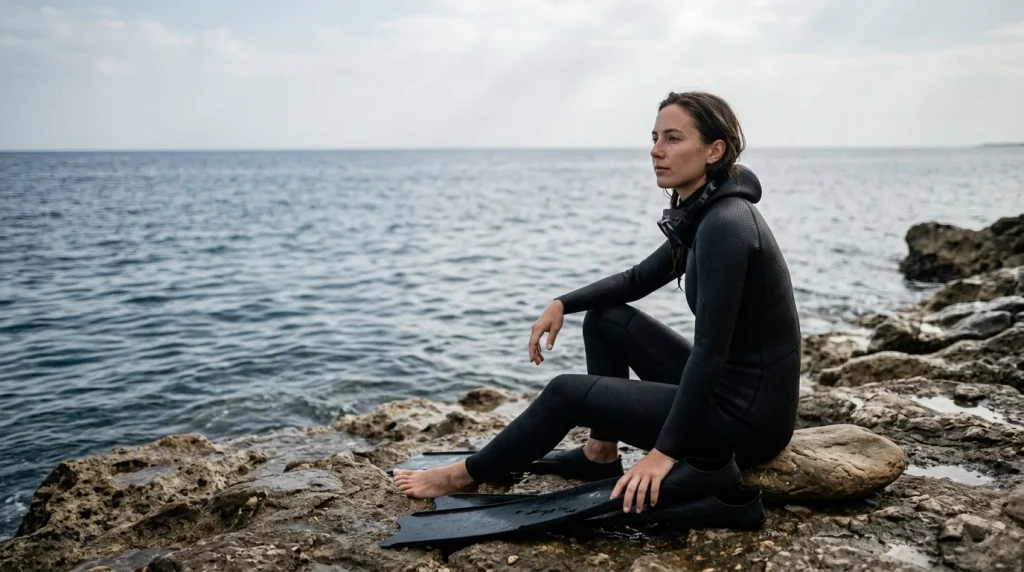
Grief doesn’t disappear because someone has a successful career. After Stephen’s death, Alessia had to continue living with the memories of their relationship and the circumstances of the dive.
She later expressed how deeply she missed him. Her words revealed something that records and medals could never show: behind the world-class athlete was a person dealing with profound personal loss.
And yet, she continued.
The ocean didn’t suddenly become easy. If anything, it now carried memories of both joy and tragedy. But Alessia returned to training and competition, continuing the career she had spent so many years building.
That doesn’t mean diving erased her grief. It didn’t.
It simply meant that grief became something she had to carry while continuing with her life.
Then She Went Even Deeper
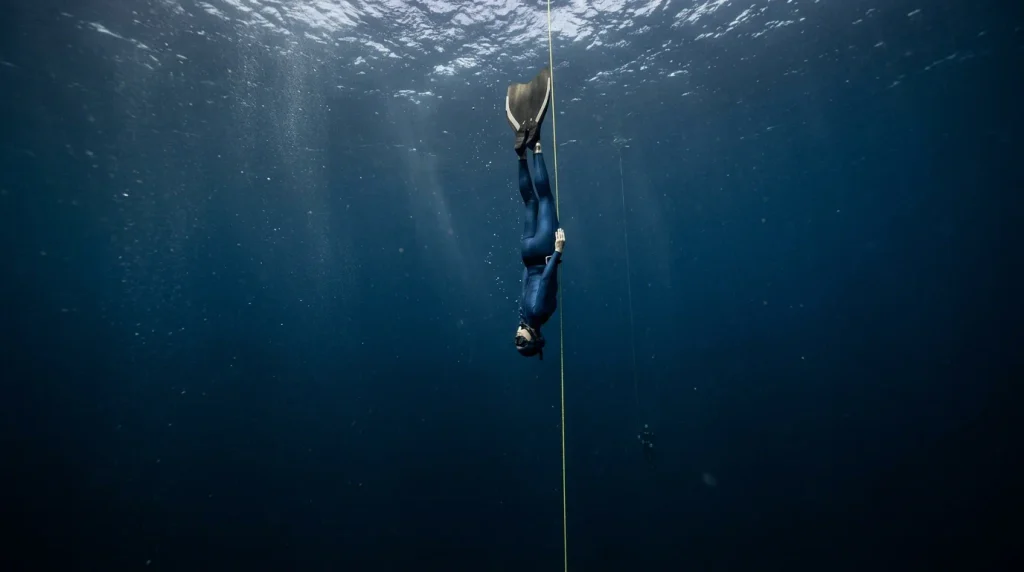
In 2018, Alessia reached 105 metres in the constant-weight monofin discipline at the Nirvana Oceanquest competition in Colombia.
Her career continued to develop, including further records at Vertical Blue in 2021. Then came May 2023.
At the AIDA Oceanquest competition in the Philippines, Alessia descended to 123 metres—approximately 403 feet—in the constant-weight monofin discipline.
The achievement was recognized by Guinness World Records as the deepest constant-weight freedive by a woman, achieved on May 24, 2023.
Think about that number for a moment: 123 metres beneath the surface, on a single breath.
But perhaps the more interesting part isn’t how deep she went. It’s everything that had happened before she reached that depth.
The teenager who discovered freediving at 13 had spent years training. She had waited for the chance to compete. She had experienced failure, broken records, built relationships and suffered a devastating loss. Yet she continued returning to the water.
The record was only the visible part of the journey.
What Her Story Really Tells Us About Success
Alessia Zecchini’s story doesn’t suggest that hard work guarantees a perfect ending. It doesn’t. Life can change even when everything seems to be going according to plan.
What her journey shows is something simpler.
Big achievements usually have a long history behind them. The world sees the record, the medal or the headline, but rarely sees the ordinary days that made that moment possible.
Her story also shows that failure doesn’t necessarily mean you’re moving backward. Sometimes it gives you information that success cannot. It can show you what needs to change before you try again.
And perhaps most importantly, courage isn’t the same as ignoring danger. Freediving demands preparation, safety, discipline and an understanding of the limits of the human body. Going deeper isn’t valuable if you cannot return safely.
The Depth Was Never the Whole Story
Today, Alessia Zecchini is known for some of the deepest freedives ever achieved by a woman. Her record history continued beyond the 2023 milestone, with further major dives documented in the following years.
But if you only remember the numbers, you miss the most human part of her story.
At 13, she found something she wanted to pursue. She spent years preparing for it. She learned from failure, reached extraordinary depths and became one of the world’s leading freedivers.
Then life gave her a loss she could never simply train her way through.
She kept going anyway.
Perhaps that’s what makes her journey more compelling than any single world record. The ocean may measure depth in metres, but a person’s journey cannot be measured that way.
Sometimes the hardest part isn’t reaching the place you’ve dreamed about.
It’s finding the strength to continue after the journey changes completely.