You feel tired and ready for bed, but sleep just will not come. You turn from one side to the other and struggle to find a comfortable position. Your neck feels stiff and your shoulders seem to carry the tension of the entire day.
If this sounds familiar, a few gentle stretches may be worth trying. They take only a few minutes and can help ease everyday muscle tightness before bedtime. You do not need special equipment or a complicated routine.
These five stretches focus on the neck, shoulders and back. They may help you feel more comfortable and relaxed at night, although they cannot guarantee that you will fall asleep faster.
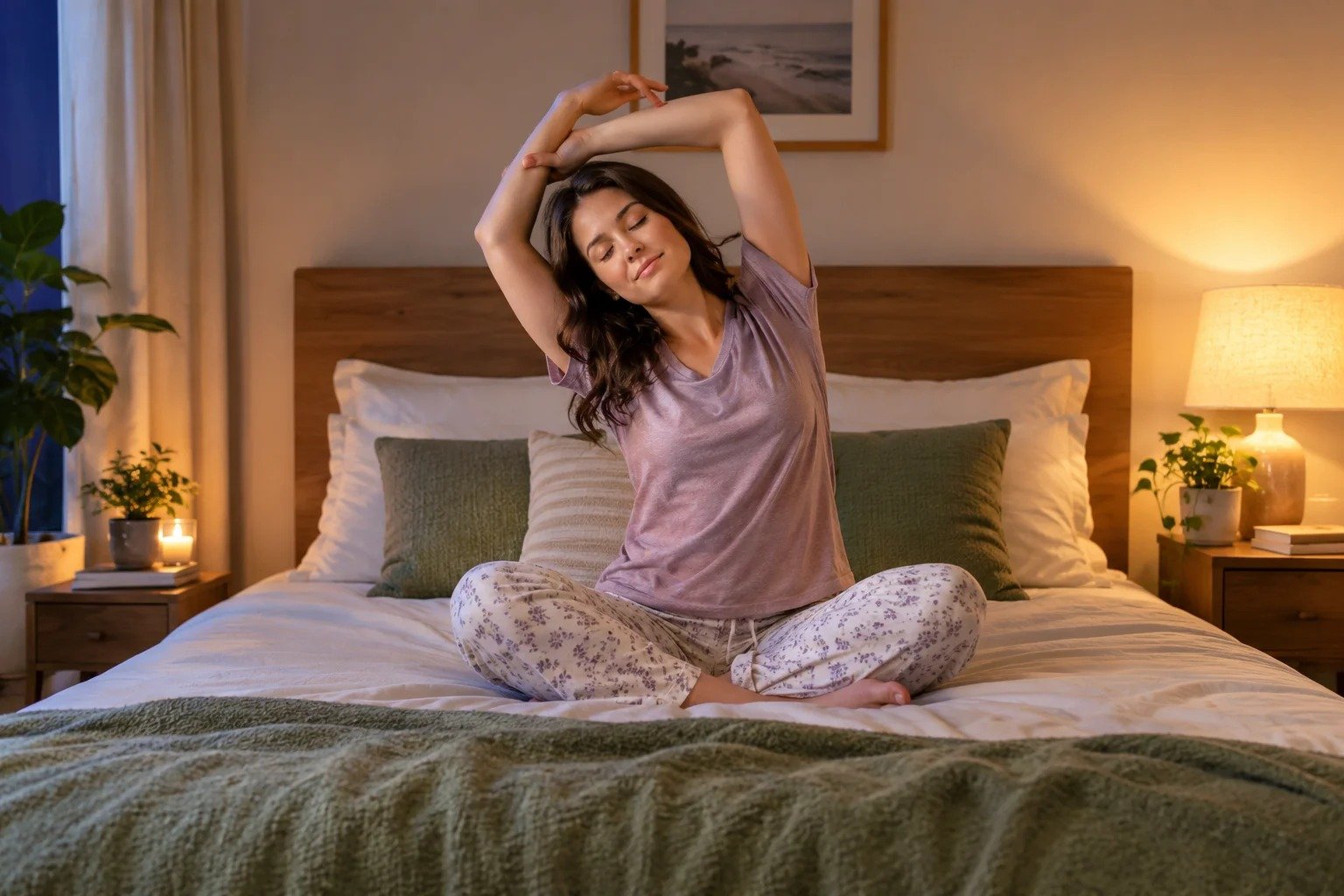
1. Neck Stretch for Daily Tension

Hours spent looking at a phone or sitting at a desk can leave your neck feeling stiff. You might not notice the tension until you finally lie down to rest. A gentle neck stretch can help loosen tight muscles and make you feel more comfortable.
Sit upright on a chair or the edge of your bed. Relax your shoulders and slowly tilt your head towards your right shoulder. Stop when you feel a gentle stretch on the opposite side of your neck. Do not pull your head down with your hand. Return to the centre and repeat on the other side.
Time
Hold the stretch for 10 to 15 seconds on each side. Keep your movements slow and breathe normally.
Benefits of the Neck Stretch
This stretch may ease mild neck tightness caused by prolonged sitting or screen use. It is a simple way to release some tension before settling into bed.
2. Cross-Body Shoulder Stretch
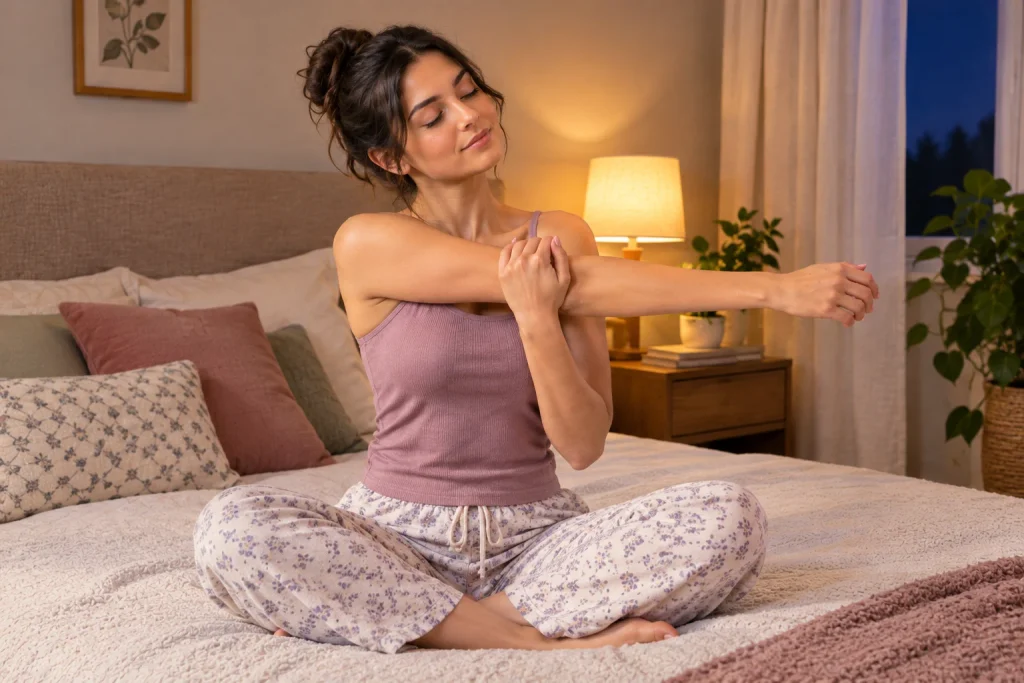
Your shoulders can stay tense long after your workday ends. Sitting at a computer or repeating the same movements throughout the day may leave them feeling stiff. This stretch targets the back of your shoulders without requiring much effort.
Sit or stand with your back straight. Bring your right arm across your chest and support it just above the elbow with your left hand. Gently draw your arm closer to your body while keeping your shoulder relaxed. You should feel a mild stretch behind your shoulder. Release slowly and repeat with the other arm.
Time
Hold for 15 to 20 seconds on each side. Avoid forcing your arm across your chest.
Benefits of the Cross-Body Shoulder Stretch
The stretch may help relieve mild shoulder tightness after a long day of sitting or working. It also gives you a quiet moment to slow down before bedtime.
3. Knee-to-Chest Stretch for a Stiff Back
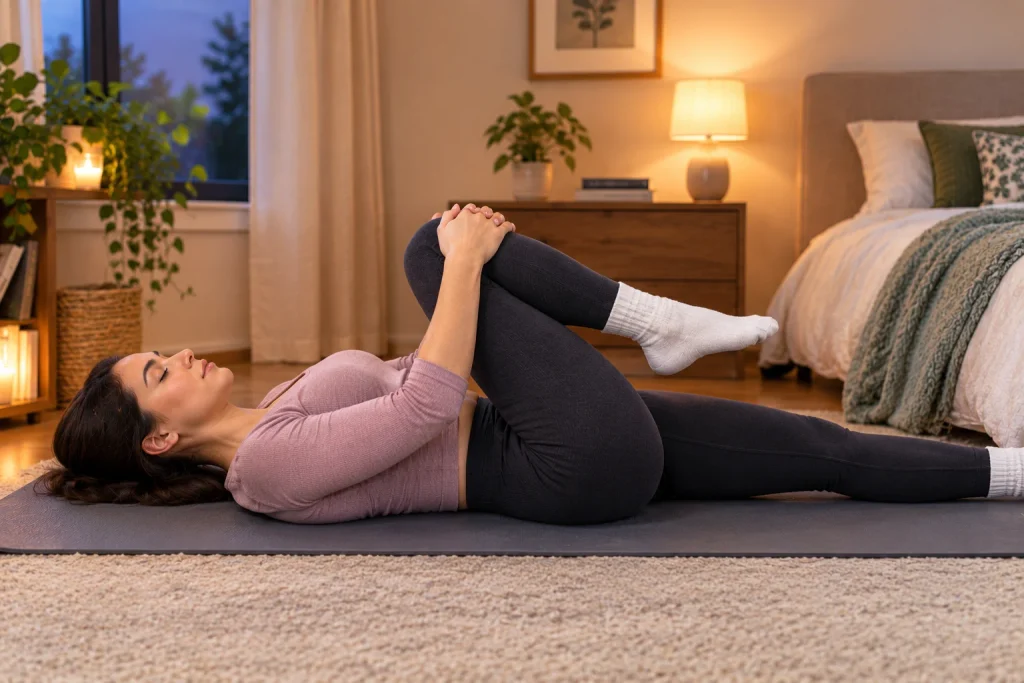
Have you ever felt lower back stiffness just as you were getting ready to sleep? Sitting for long periods can leave your back and hips feeling uncomfortable. The knee-to-chest stretch offers a gentle way to move while keeping your back supported.
Lie on your back with your knees bent and your feet resting on the bed or floor. Slowly bring your right knee towards your chest. Hold behind your thigh or over your shin and bring the leg closer only as far as feels comfortable. Keep your head and shoulders relaxed. Return your foot to the starting position and repeat with your left leg.
Time
Hold each leg for 15 to 20 seconds. Move gently and stop if the stretch causes pain.
Benefits of the Knee-to-Chest Stretch
This movement may help ease mild stiffness around your lower back and hips. If you have an existing back or hip condition, ask a healthcare professional whether this stretch is suitable for you.
4. Lying Spinal Twist for Gentle Movement
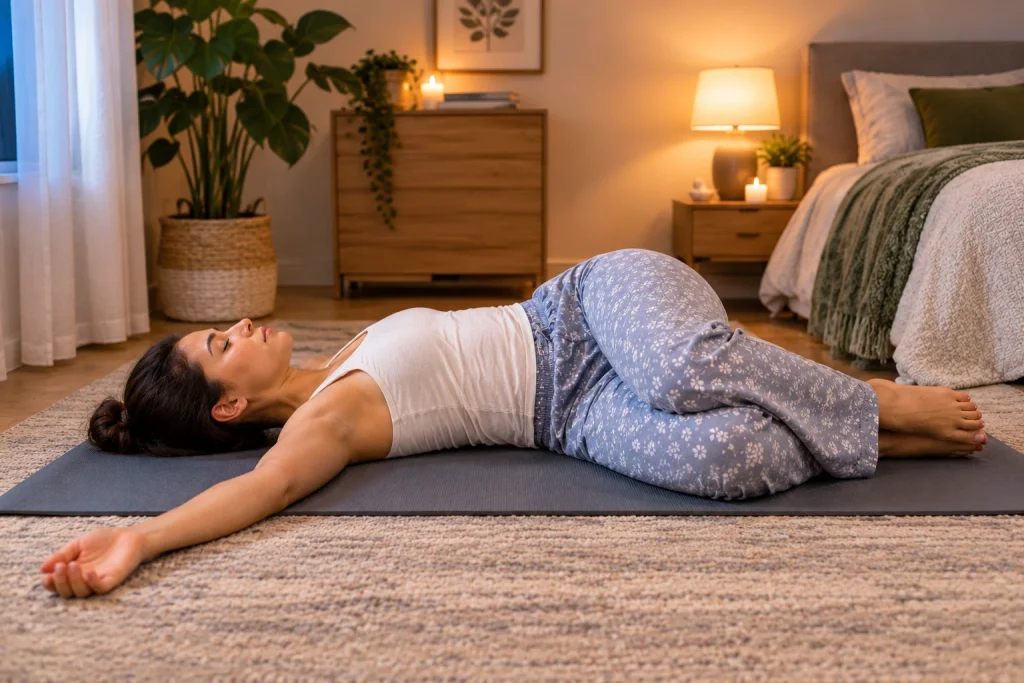
After a day of sitting or standing, your back may feel as though it needs a little movement. A lying spinal twist lets you gently rotate your body without doing a demanding exercise.
Lie on your back with your knees bent and your feet resting on the bed or floor. Extend your arms out to the sides if comfortable. Slowly lower both knees towards your right side while keeping your shoulders relaxed. Move only as far as feels easy, then return your knees to the centre and repeat on the left. You can place a pillow between your knees for support.
Time
Hold the position for 15 to 20 seconds on each side. Keep your movements controlled and never force the twist.
Benefits of the Lying Spinal Twist
This stretch gently moves your back and trunk. It may help ease mild stiffness and make changing positions feel more comfortable. Skip it if it causes pain or worsens an existing back problem.
5. Child’s Pose to Wind Down
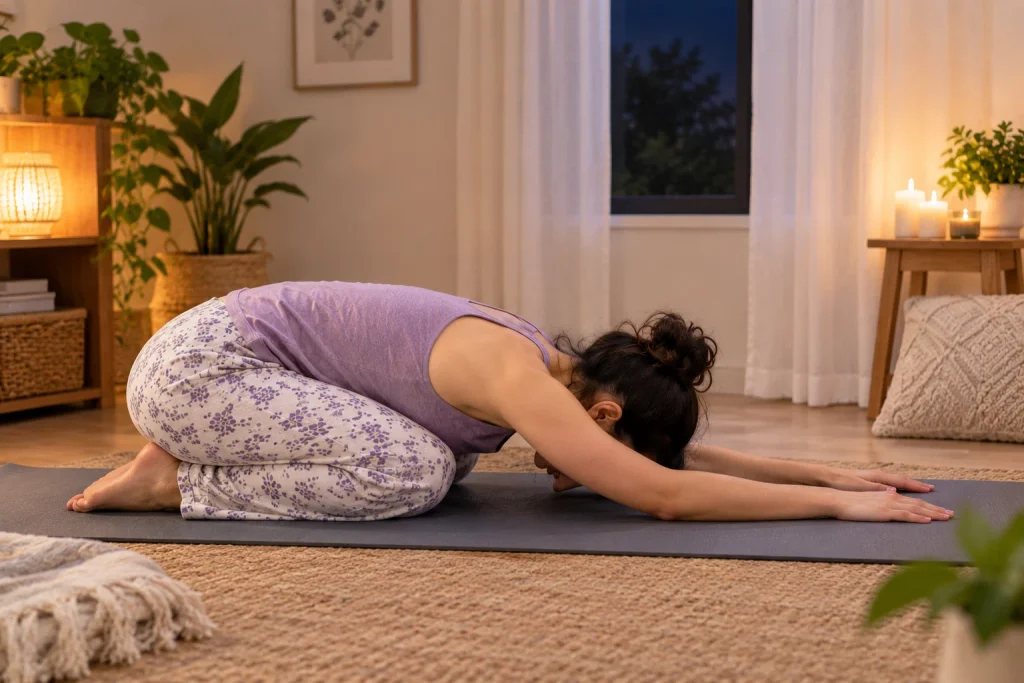
Sometimes the best way to end the day is to slow down completely. Child’s pose is a gentle stretch for the back and hips. It also gives you a chance to pause and focus on your breathing instead of thinking about the day’s worries.
Start on your hands and knees. Slowly move your hips towards your heels while lowering your upper body towards your thighs. Stretch your arms forward or rest them beside your body. If your forehead does not reach the floor comfortably, place a cushion underneath it. Adjust the position to avoid pressure on your knees or hips.
Time
Hold the position for 20 to 30 seconds while breathing naturally. Return to your starting position slowly.
Benefits of Child’s Pose
A child’s pose may help ease mild tightness in your back and hips. The quiet position can also provide a calming pause before bed. You should feel comfortable throughout the stretch rather than pushing your body beyond its limits.
How Much Stretching Do You Need Before Bed?
You do not have to complete all five stretches every night. Start with two or three that feel comfortable and see how your body responds. A short routine is easier to maintain than one that feels like another task at the end of a busy day.
Keep every movement gentle. You should feel a mild stretch rather than sharp pain, numbness or tingling. Stop if a movement makes you feel worse. If you have an injury or ongoing joint or back problems, check with a healthcare professional before trying new stretches.
Can These Stretches Help You Fall Asleep Faster?
Gentle stretching may help you relax before bed, especially when muscle tightness makes it difficult to get comfortable. Making time for a calming bedtime routine may also help prepare you for sleep.
However, stretching does not solve every sleep problem. Stress, caffeine, irregular sleep habits and certain health conditions can all affect how easily you fall asleep. If you regularly struggle to sleep or feel exhausted during the day, speak with a healthcare professional rather than relying on stretches alone.
Make Your Bedtime a Little Calmer
You do not need a perfect nighttime routine to get started. Choose a stretch that feels good, move slowly and give yourself a few quiet minutes before bed. The aim is not to force sleep but to help your body settle after a long day.
Try the routine for a few evenings and notice how you feel. Even if you do not fall asleep immediately, a gentle moment of relaxation can be a useful way to end your day.