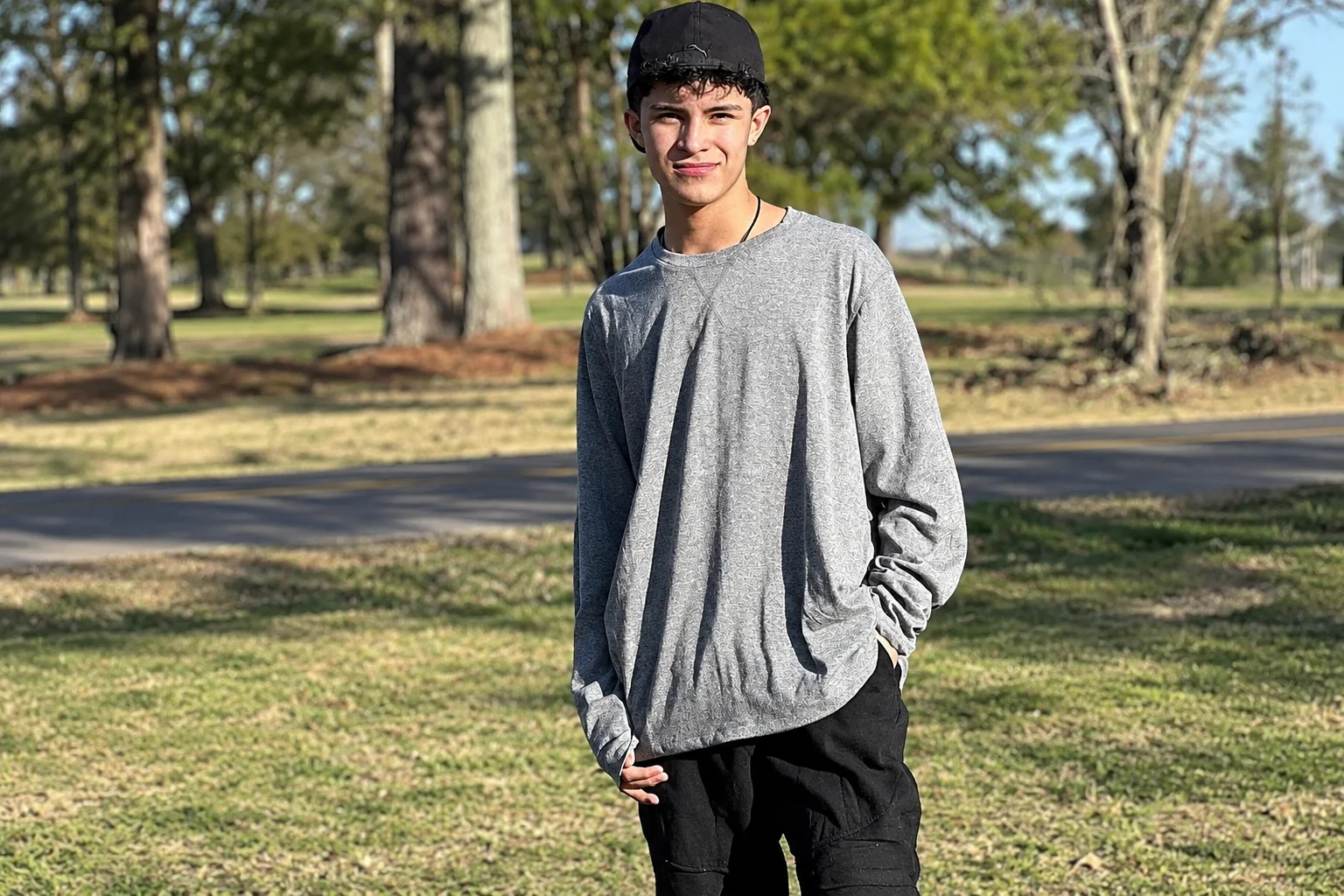
At 18, Elder Chavez Carranza should have been thinking about school, friends, graduation and what kind of life he wanted to build after high school. Instead, he has spent months inside an immigration detention facility in Louisiana, far from his family and the Alabama community where he had built his life.
That is what makes Elder’s story so difficult to understand. He did not arrive in the United States as an adult looking for a temporary place to stay. He came from Honduras when he was just 14 years old. Over the following years, he went to school, lived with his older sister, made friends and began thinking about a future that included learning practical skills and becoming a welder.Now, one unresolved immigration case has put almost everything he was planning on hold.
A Teenager’s Life Was Taking Shape
Elder is from Copán, Honduras. After coming to the United States as a teenager, he eventually lived in Albertville, Alabama, with his sister Maryuri, who became his legal guardian.
For Elder, Alabama gradually became home. His life was no longer simply about immigration paperwork or where he had come from. It was about school, family, classmates and the ordinary routines of being a teenager.
He became interested in hands-on work, including carpentry and welding. During a school carpentry class, he made a wooden chair that his sister kept at home. It was a small project, but it represented something much bigger: Elder was learning skills and imagining what his life could look like after school.
Then, in December 2025, that future was suddenly interrupted.
It Started With a Traffic Stop
The incident that led to Elder’s detention began with a traffic stop in Alabama.
Accounts of the stop describe some of the details differently. Elder has said he was on his way to get food when he was stopped and questioned about identification and immigration documents. Other reporting has said the stop involved speeding and driving without an Alabama driver’s license.
What happened next is less complicated. Immigration authorities became involved, and Elder was taken into ICE custody.
According to Elder, he tried to explain that he had immigration status and wanted to show his paperwork, but he was taken away before he could do so.
For a teenager who had been living and going to school in Alabama, an ordinary trip had suddenly turned into the beginning of a long period of detention.
The Immigration Status That Makes His Case Complicated
One of the most important parts of Elder’s story is also one of the easiest to misunderstand.
When he was a minor, Elder received Special Immigrant Juvenile classification, commonly called SIJ or SIJS. This immigration pathway exists for certain young people who meet specific requirements involving abuse, abandonment, neglect or similar circumstances and who receive the required findings from a juvenile court.
But SIJ classification does not itself mean that a person already has a green card. Instead, it can create a pathway toward permanent residency for eligible young people. Additional immigration steps can still be necessary.
In Elder’s case, his attorney has said that his SIJ classification was approved by U.S. Citizenship and Immigration Services. At the same time, another part of his immigration process, involving deferred action, remained unresolved.That distinction is at the heart of the story.Elder had received an important form of immigration protection, but his entire immigration journey had not yet reached its final stage.
Why Didn’t the Approved Status End His Detention?
This is where the case becomes difficult for someone unfamiliar with immigration law.
It may seem logical that once a young person’s SIJ classification is approved, detention should automatically end. But the immigration system does not work that simply.
Different applications and proceedings can operate separately. A bond hearing, for example, is different from the underlying removal case. An immigration judge deciding whether someone should be released from detention is not necessarily deciding the person’s entire immigration future at the same time.
That means a person can be fighting for release from detention while the larger immigration case is still moving through a separate process.That is essentially where Elder finds himself.
His lawyer has argued that the government had already recognized his eligibility for SIJ protection. The government, meanwhile, has maintained that he would remain in ICE custody while his immigration proceedings continued and that he would receive due process.
More Than 200 Days Away From Home
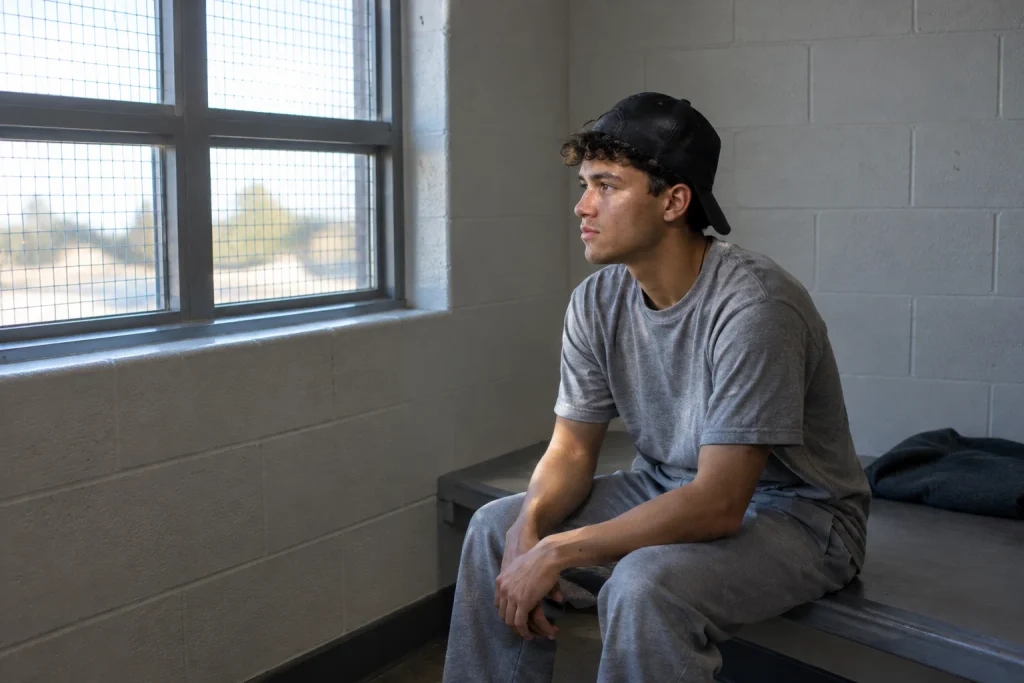
As the months passed, Elder remained at the Winn Correctional Center in Louisiana.
The distance from his home in Alabama was not just measured in miles. It meant being separated from the people and places that had become part of his everyday life.
His sister has said that Elder calls home and talks about how much he misses his teachers, classmates and school.
For an adult, losing several months to a legal case can already be difficult. For an 18-year-old who is still in the middle of his education, those months can feel even more significant.
While other students continued attending classes, making plans and preparing for the next stage of their lives, Elder remained inside a detention facility waiting for his case to move forward.
What Happens to a Future While Someone Is Waiting?
That may be the most human part of Elder’s story.
A legal case can be measured in hearings, applications and deadlines. A teenager experiences the same period differently.
He misses:
- He misses birthdays.
- He misses school days.
- He misses conversations with friends.
- He misses opportunities to learn and work toward a career.
He also watches his classmates move forward while his own life seems to be standing still.
Elder has reportedly tried to keep himself occupied while detained. He has worked inside the facility and developed friendships with other detainees. He has also relied on his faith and family support to get through the experience.
But staying busy does not remove the uncertainty.
The same question remains every day: How much longer will he have to wait?
His Family and Community Have Not Stopped Fighting
As Elder’s detention continued, people outside the facility began organizing around his case.
Family members, friends, teachers, religious leaders and other community supporters have spoken out and submitted letters asking for his release.More than 50 letters were presented during his bond proceedings, according to supporters of his case.
The letters were intended to show that Elder had strong connections to his community and people who were willing to support him if he were released.His supporters also argued that he wanted to return home, continue his education and work toward the future he had been planning before his detention.
But community support alone did not determine the outcome.
Then Came the Bond Hearing
After months in detention, the question became more immediate: Could Elder be released while his immigration case.
That question was addressed at a bond hearing on October 2, 2026.His legal team argued for his release and presented evidence of his family and community connections. Supporters also emphasized that he had people waiting for him outside detention.
According to an update from people supporting Elder’s case, his attorney even offered a bond of up to $50,000 and Elder was willing to accept electronic monitoring.
The judge nevertheless denied bond.That decision meant Elder would remain in ICE custody while his immigration proceedings continued.
What the Bond Denial Does—and Does Not—Mean
The bond decision is important, but it does not automatically answer the biggest question about Elder’s immigration future.
A bond hearing is primarily about detention and release. Under immigration-court rules, bond proceedings are separate from the main removal proceedings.
So a denial of bond does not by itself mean that Elder has been deported or that every part of his immigration case has been decided.
It means that, for now, he remains detained while the broader legal process continues.
That distinction is important because it explains why Elder’s story does not end with the judge’s decision.
It simply means the waiting continues.
A Case That Raises Bigger Questions
Elder’s situation has attracted attention because it sits at the intersection of several complicated issues.
What happens when someone enters the United States as a child, grows up in an American community and receives a form of humanitarian immigration protection, but still has unresolved steps in the immigration process?How should detention decisions be handled when the person is only 18 and has strong family, school and community connections?And how much of a young person’s future can disappear while a legal case moves through the system?
There are no simple answers to those questions.
Elder’s individual case will ultimately depend on the legal proceedings surrounding him. His situation should not be treated as proof that every person with SIJ classification will face the same outcome.But his story does show how different parts of the immigration system can overlap in ways that are difficult for families to understand.
The Boy Who Was Building a Future
Before his detention, Elder was not known for being an immigration case.
- He was a student.
- He was a brother.
- He was a friend.
- He was a teenager learning carpentry and thinking about welding.
He had made a chair in school, made friends and built a routine in Alabama.
Now, at 18, he is spending his days in detention in Louisiana, waiting for decisions that could determine what happens next.His family is still waiting for him to come home.His supporters are still asking for his release.And his immigration case is still moving forward.
For Elder, the most difficult part may be that his life cannot simply be paused forever. School years end. Friends graduate. People change jobs and move on. Opportunities come and disappear.Yet he remains in the same place, waiting for the legal process to decide when he can move forward too.
He came to America at 14 and began building a future here.Now, at 18, that future is still there—but for the moment, it is on hold.