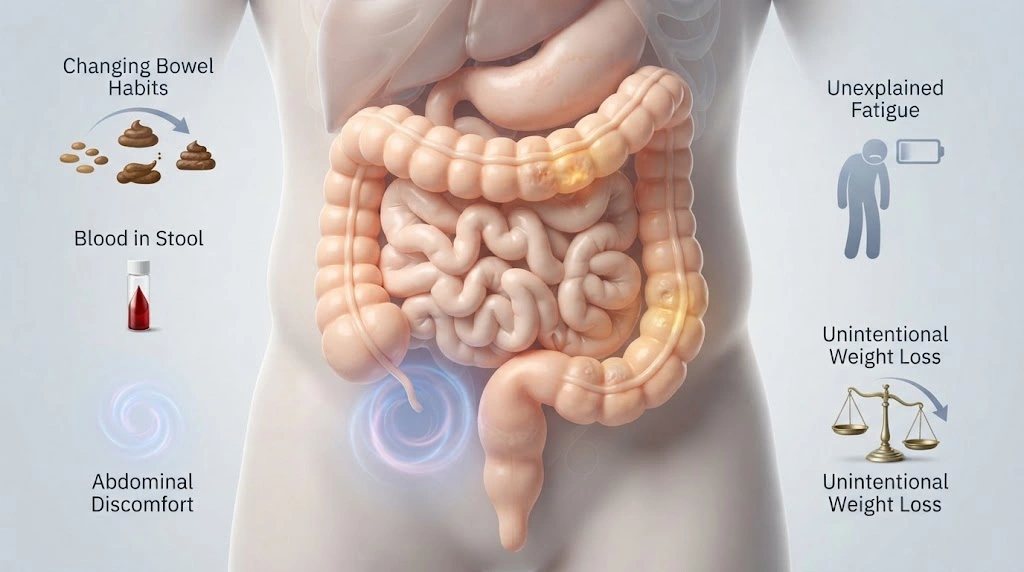
Colorectal cancer does not always start with a symptom that makes you stop and think, “Something is seriously wrong.”
Sometimes it is much less obvious. Your bathroom routine changes. You feel unusually tired for weeks. Your stomach keeps bothering you. You lose weight without trying.
It is easy to blame those things on stress, a change in diet, constipation, or simply getting older. And often, there is a much less serious explanation.
Still, a new change that sticks around or keeps coming back deserves attention.
When your usual bathroom routine suddenly changes
You probably know what your normal bathroom routine looks like, even if you have never really thought about it.
Maybe you usually go once a day. Maybe your pattern is different. What matters is what is normal for you.
A noticeable change can include constipation when you normally have regular bowel movements, diarrhea that keeps returning, or stools that become narrower than usual. Changes in bowel habits and stool shape are among the symptoms associated with colorectal cancer.
One unusual bowel movement is not the same as an ongoing change. A stomach bug, a different diet, medications, dehydration, and several other everyday problems can temporarily affect your digestion.
The thing to watch is the pattern. If your bowel habits have changed and the change is not settling, talk with a healthcare professional instead of assuming it will eventually disappear.
You go to the bathroom, but something still feels wrong
There is another change that can be easy to dismiss.
You have a bowel movement, but afterward you still feel as though you need to go. You sit there for another minute, try again, and nothing much happens.
That sensation is sometimes called incomplete bowel emptying, and it can have many causes. Constipation and other digestive problems can produce it too.
But a new, persistent feeling that your bowel is not emptying normally is worth mentioning to a healthcare professional. It is listed by organizations such as the CDC and American Cancer Society as a possible symptom of colorectal cancer.
You do not need to panic over one uncomfortable trip to the bathroom. Pay attention if it becomes your new normal.
Blood in your stool is worth checking
Blood is one of those things people sometimes explain away.
Bright-red blood can come from problems such as hemorrhoids, while bleeding higher in the digestive tract can make stool look very dark or even black. Colorectal cancer is another possible cause, particularly when bleeding continues or appears alongside other changes.
There is also a catch: you cannot always see digestive-tract bleeding.
Slow blood loss can happen without obvious blood in the toilet. Over time, it may contribute to anemia, which can leave you feeling weak or unusually tired.
So, no, blood in your stool does not automatically mean cancer. There are plenty of other explanations. But unexplained or recurring bleeding should not simply be ignored. A healthcare professional can help determine where it is coming from and whether further testing is needed.
Feeling exhausted when you normally wouldn’t
Everyone has days when they are tired.
The more noticeable situation is when the tiredness hangs around and does not seem to match what is happening in your life. You are sleeping reasonably well, your routine has not changed much, yet you feel drained anyway.
Anemia is one possible explanation. Colorectal cancer can sometimes cause slow bleeding, and ongoing blood loss can reduce the body’s red blood cell levels.
That can leave someone feeling weak, short of energy, or worn out.
Fatigue on its own is extremely common. Poor sleep, stress, infections, nutritional problems, thyroid conditions, medications, and many other issues can cause it. It becomes more useful as a warning sign when it appears together with things such as bowel changes, blood in the stool, abdominal symptoms, or unexplained weight loss.
Your stomach keeps bothering you
Gas happens. So does bloating after a large meal.
What is different is abdominal discomfort that keeps returning or never really goes away. You might notice cramping, pressure, pain, or a general feeling that your stomach has not been right lately.
There is no single type of abdominal pain that points directly to colorectal cancer. Digestive infections, irritable bowel syndrome, food intolerances, ulcers, and many other conditions can cause similar symptoms.
That is why one bad stomach day does not tell you much.
A recurring problem is different. If abdominal symptoms continue without an obvious explanation, especially when they occur with bowel changes or other symptoms in this article, getting them evaluated is sensible.
Losing weight without trying
Most people notice when they are deliberately losing weight.
Unintentional weight loss is different.
Maybe your clothes suddenly feel looser even though you have not changed your diet or exercise routine. Maybe the number on the scale keeps dropping and you are not sure why.
There are many possible causes, including infections, digestive disorders, thyroid problems, appetite changes, and other medical conditions. Cancer is another possibility, including colorectal cancer.
The amount and speed of weight loss matter, but so does what comes with it. Weight loss accompanied by persistent bowel changes, abdominal discomfort, fatigue, reduced appetite, or bleeding deserves medical attention.
You do not have to wait until the weight loss becomes dramatic before asking what is causing it.
You can have colorectal cancer without feeling sick

This is where symptoms can be misleading.
Some colorectal cancers and precancerous polyps cause no obvious symptoms, particularly in their earlier stages. Someone can feel perfectly fine and still have a polyp or cancerous change developing in the colon or rectum.
That is one reason screening matters.
For adults at average risk in the United States, major guidelines recommend beginning regular colorectal cancer screening at age 45. People with a strong family history, certain inherited conditions, or other risk factors may need to start earlier or follow a different screening schedule.
Screening is not the same as waiting for symptoms. It is designed to find problems before they necessarily cause noticeable changes.
What should you do if you notice these changes?
Do not assume every digestive symptom is cancer. Most are not.
At the same time, do not talk yourself out of getting checked simply because the symptom seems minor.
If you notice a new change in your bowel habits, recurring blood in your stool, persistent abdominal symptoms, unexplained fatigue, or weight loss you cannot explain, make an appointment with a healthcare professional. They can look at the whole picture—including your age, medical history, medications, family history, and symptoms—and decide whether testing is appropriate.
And if you are in the recommended screening age group, do not wait for symptoms before discussing screening.
Colorectal cancer can be quiet. Sometimes the only clue is a change that seems too small to matter.
That is exactly why paying attention to what is normal for your body can be useful.